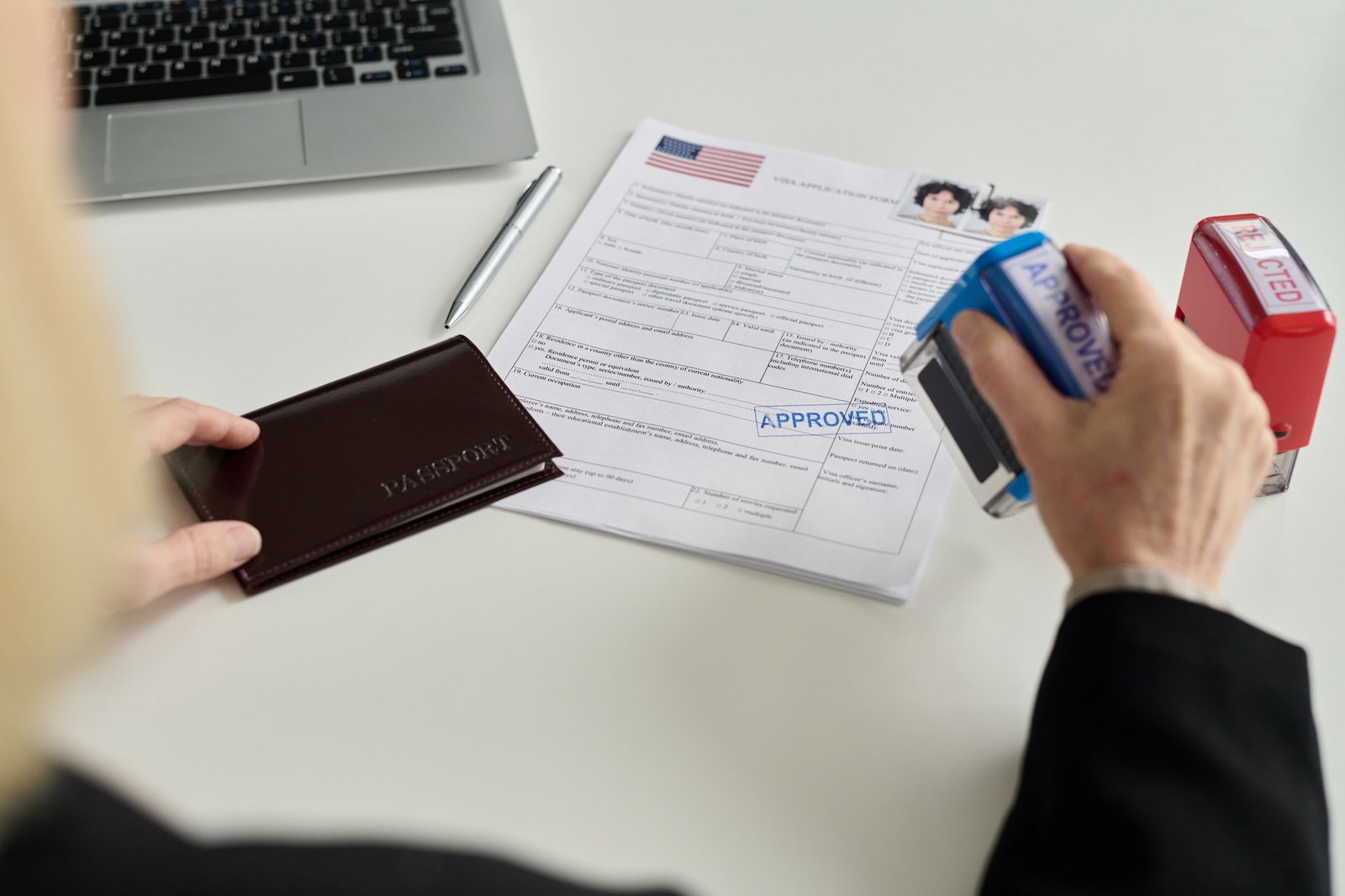
How to Apply for the Non-Lucrative Visa (NLV) in Spain – 2025 Step-by-Step Guide
For non-EU citizens who wish to live in Spain without working locally, the Non-Lucrative Visa (NLV) remains one of the most popular residence routes in 2025. Retirees, remote workers, digital nomads (who prefer this path over the Digital Nomad Visa), and families relocating to Spain often choose this visa because it offers a straightforward path to long-term residency and eventually permanent residency or even citizenship.
That said, applying successfully requires careful preparation, correct documentation, and an understanding of the financial and legal requirements. Mistakes at the application stage can result in delays or rejections, which is why having a clear, structured plan is essential.
This guide takes you through each stage of the process step by step, with updated requirements for 2025.
Step 1: Confirm Your Eligibility
The Non-Lucrative Visa is designed for non-EU nationals who can support themselves financially without working in Spain. It is especially popular among:
- Retirees with pensions or savings.
- Individuals with substantial savings, passive income, or foreign rental income.
- Digital nomads or freelancers whose income is based outside Spain (though many opt for the Digital Nomad Visa instead — see our guide: NLV vs DNV – Which is Right for You?).
- Families relocating with children.
✅ Key eligibility rules:
- You must not work for a Spanish company or carry out lucrative activity in Spain.
- You must prove sufficient financial means (see Step 2).
- You must show private health insurance or valid healthcare cover.
- You must provide clean criminal records and proof of accommodation in Spain.
Step 2: Financial Requirements (2025 Figures)
The cornerstone of the NLV is demonstrating sufficient financial means. Spain sets these amounts against the IPREM (Indicador Público de Renta de Efectos Múltiples).
For 2025:
- Main applicant: approx. €2,400/month → €28,800/year.
- Since the initial visa is valid for 1 year, but renewals are for 2 years, you must often prove you have €57,600 available (for 2 years).
- Each dependent: additional 25% of IPREM = approx. €600/month → €7,200/year. For renewals, this becomes €14,400 for 2 years.
💡 Example: A couple with one child would need approx. €57,600 (main applicant) + €14,400 (spouse) + €14,400 (child) = €86,400 for the first renewal.
Funds can be shown through:
- Bank account statements.
- Proof of pension payments.
- Rental income or dividends.
- Long-term investments.
Case Study 1: UK Retiree Applying for the NLV
David, a 67-year-old retiree from Manchester, decided to relocate to Spain’s Costa Blanca for a sunnier and more relaxed lifestyle. His UK pension income amounted to just over €2,800 per month, and he had savings of €80,000 in his bank account. When preparing his NLV application, David submitted certified translations of his pension award letters, six months of UK bank statements, and proof that his funds had been transferred into a Spanish account. The Spanish consulate in London was satisfied that David exceeded the minimum financial threshold for the first year and granted him the visa. His smooth approval highlights how strong pension documentation and savings can make the process straightforward for retirees.
Step 3: Secure Private Health Insurance
Before applying, you must obtain private health insurance that:
- Covers the whole of Spain.
- Has no co-payments (sin copago).
- Has no waiting periods (sin carencia).
- Matches the coverage provided by Spain’s public healthcare system.
This policy must be active from the day you arrive in Spain. Any lapse in coverage, even if you change insurers later, could jeopardise renewal.
👉 Platinum Legal Spain works closely with 247 Expat Insurance to provide visa-compliant health insurance with fast documentation, which is a crucial part of every NLV application.
Case Study 2: US Digital Nomad Applying for the NLV
Sarah, a 34-year-old freelance writer from California, initially considered applying for Spain’s Digital Nomad Visa (DNV). However, she was unsure about meeting the remote work proof requirements, so she opted for the Non-Lucrative Visa instead. Sarah had savings of around €100,000 but her monthly freelance income was irregular. She focused her application on her savings, providing notarised bank statements and investment portfolio reports. Despite not showing a steady monthly income, the large lump sum was considered sufficient to meet the NLV financial requirements. Her application was approved, demonstrating that applicants without predictable income can still succeed if they have strong savings.
Step 4: Gather All Required Documentation
The NLV application requires a significant number of official documents. These must often be legalised (apostilled) and translated into Spanish by a sworn translator.
Typical documents include:
- Completed national visa application form.
- Valid passport (minimum 1 year validity).
- Recent passport photos.
- Proof of sufficient funds (see Step 2).
- Proof of accommodation in Spain (rental contract, property deed, or invitation letter).
- Private health insurance certificate (see Step 3).
- Criminal background check (FBI, ACRO, RCMP, etc. depending on your country).
- Medical certificate confirming good health.
- Marriage certificate / birth certificates for dependents.
- NIE (Número de Identificación de Extranjero) application form (may be processed later at police station).
All documents must be apostilled in your home country and translated into Spanish before submission.
📌 For guidance on these processes, see:
Step 5: Apply at Your Nearest Spanish Consulate
Applications for the NLV must be made outside Spain, at the Spanish Consulate covering your jurisdiction.
- Book an appointment well in advance — some consulates have wait times of several months.
- Submit your application with all documentation in order.
- Pay the relevant consular fee.
- Some consulates conduct short interviews to confirm your plans and ability to support yourself.
Case Study 3: British Family of Four Applying for the NLV
James and Laura, along with their two children aged 10 and 14, wanted to move to Spain for better quality of life and education opportunities. The family applied through the Spanish Consulate in Manchester. The main applicant, James, showed an annual salary equivalent to €45,000 from his remote UK employment (he resigned before moving, as work is not permitted on the NLV) and additional savings of €60,000. For his dependents, he added 25% of the IPREM per child and 50% for his spouse. The family submitted private health insurance certificates covering all four members with no co-payments, plus school registration documentation for the children. The application was successful, though the family had to carefully budget to ensure they met the higher financial thresholds for dependents.
Step 6: Collect Your Visa and Travel to Spain
Once approved, your visa will typically be valid for 90 days for entry into Spain. After arrival, you must:
- Register your residency locally (empadronamiento).
- Apply for your TIE card (Tarjeta de Identidad de Extranjero).
Step 7: Post-Arrival Formalities in Spain
After arriving in Spain, there are several legal steps to complete:
- Register on the padrón (empadronamiento) at your town hall. 👉 See our full guide: Empadronamiento – How to Register on the Padrón.
- Apply for your TIE card at the local police station within 30 days of arrival.
- Open a Spanish bank account, if not already done.
- Register for taxes — once you spend more than 183 days in Spain, you are a Spanish tax resident. This means you must:
- File an annual renta tax return.
- Report worldwide income.
- Consider double taxation treaties with your home country. See: Spanish Tax Residency Certificate – How to Obtain It.
Step 8: Renewal of the Non-Lucrative Visa
The first visa is valid for 1 year. Renewals are then granted for 2 years at a time.
At renewal, you must:
- Prove financial means for the next 2 years (see Step 2).
- Maintain uninterrupted health insurance cover.
- Show proof of ongoing residence (empadronamiento).
- Demonstrate tax compliance in Spain.
💡 Tip: Gaps in insurance coverage, unpaid taxes, or insufficient savings are the most common reasons for renewals being refused.
After 5 years of continuous residence, you may apply for long-term residency. After 10 years, you may apply for Spanish citizenship (with some exceptions — e.g. Latin American citizens may qualify earlier).
See: Renewal of the Non-Lucrative Visa
Case Study 4: NLV Renewal – Avoiding Pitfalls
Michael, a 55-year-old Canadian living in Málaga, applied to renew his Non-Lucrative Visa after his first year in Spain. He had maintained private health insurance, but switched providers halfway through the year. Unfortunately, there was a one-week lapse in cover during the transition, which caused concern during the renewal process. The immigration office questioned whether he had been continuously insured, as required by law. Luckily, Michael was able to provide a notarised statement from both insurers confirming there had been no effective break in medical cover. His renewal was eventually approved, but the process took much longer. This case shows why it’s crucial to avoid any gaps in insurance coverage when preparing for renewal.
Step 9: Long-Term Planning – Switching Visas or Applying for PR
The NLV can be a stepping stone to other routes:
- After your first year, you may switch to a work permit or Digital Nomad Visa if eligible.
See: Remote Working from Spain – DNV or Work Permit?. - After 5 years, apply for permanent residency.
- After 10 years, consider citizenship (nationality rules apply).
Common Mistakes to Avoid
- Submitting incomplete or poorly translated documentation.
- Not apostilling criminal record checks.
- Health insurance with co-payments or waiting periods.
- Failing to show sufficient funds for 2 years at renewal.
- Gaps in residency — leaving Spain for more than 6 months in a year.
For more, see: Avoid These Common Mistakes When Applying for the Non-Lucrative Visa in Spain.
FAQs – Non-Lucrative Visa (NLV) in 2025
1. Can I work in Spain on an NLV?
No, you cannot work for a Spanish company or be employed locally.
2. Can I work remotely for a foreign company?
Yes, as long as your employer is outside Spain and you are not invoicing Spanish clients.
3. How much money do I need in 2025?
€28,800/year for the main applicant + €7,200/year per dependent. Renewals require 2x this amount.
4. What happens after 5 years?
You can apply for long-term residency.
5. What happens if my insurance lapses?
A lapse in cover could lead to denial of your renewal. Always ensure continuous coverage.
6. Do I need to pay taxes in Spain?
Yes — once you spend 183+ days in Spain, you are a tax resident and must file a renta tax return.
7. Can dependents join me?
Yes, spouses and children under 18 (or dependent adults) can be included.
8. Do I need to show proof of Spanish language ability?
Not for the NLV, but integration may help renewals or later citizenship.
9. How soon should I apply?
At least 3 months before planned travel. Consulate appointment slots can be limited.
10. What if my application is rejected?
You may appeal or reapply. See: Most Common Reasons Spanish Visa Applications Get Rejected.
Conclusion
Applying for the Non-Lucrative Visa in Spain in 2025 is a detailed process, but with the right preparation it provides a secure pathway to residency, family relocation, and eventually long-term settlement in Spain.
Platinum Legal Spain assists expats through every stage — from preparing documentation and arranging translations, to guiding you through renewals and long-term planning.
👉 If you’re considering an NLV, speak to our immigration specialists today for tailored support.